

Seeds heads of Papaver somniferum.
Seeds heads of Papaver somniferum.

Open flowers of Papaver somniferum. inside one of them, you can see the seed pod forming, the petals drop off as the pods mature.

Now that it’s summer and things are blooming, I’m going to spend a little time here sharing my recent gardening adventures. I planted a variety of edible plants in raised beds. The most spectacular so far is poppies, for edible poppy seeds. These Hungarian Blue Breadseed poppies (Papaver somniferum) are huge. They are just over four feet tall. The bright purple flowers are nearly as big as my hand, and the seed pods are balls with a two inch diameter. While mostly purple, we’ve had a few flowers open up red, or purple-red. I love how spiny the leaves and stems are, and the way the bend over sharply just before the flowers open up. They are very cheerful. They aren’t quite ready to harvest yet, but so far they’ve been lots of fun. (http://www.bountifulgardens.org/Poppy-Hungarian-Blue-Breadseed/productinfo/GPO-7349/)


Unidentified fungal spore picture taken with a scanning electron microscope, redwood forest habitat in Santa Cruz by Sharifa Crandall.
My friend, Sharifa, is working on her a PhD in Environmental Science, she also has a one year old daughter. We were watching the kids play together one night and she commented that that she sees spores everywhere now, especially in all of the variations of toy balls. Unadorned spores, adorned spores, cylindrical, and oblong spores, big and little spores… So many toy spores to play with.
Linda is here with me, please ask questions!
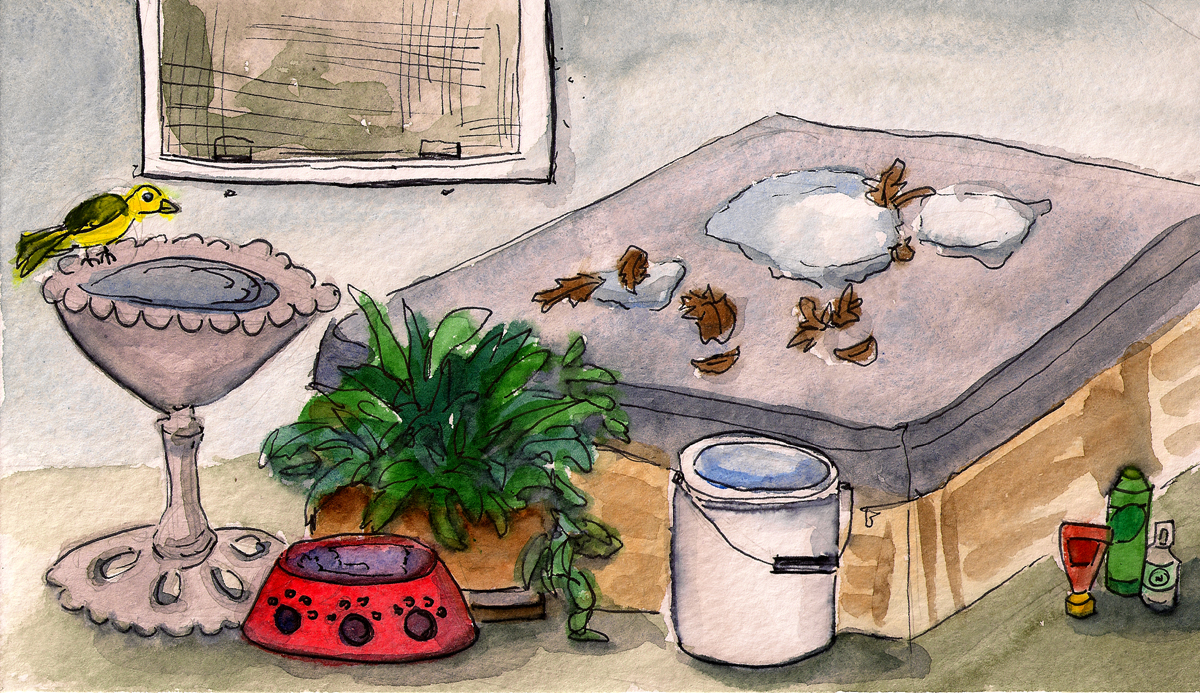
Mosquito control districts in the U.S. work with state public health departments to ensure that if West Nile virus is detected, the public is notified and efforts are made to control the mosquito population. Nevertheless, it’s still important to use some common sense practices for keeping mosquitoes out of your home and reduce the number of bites that you get. No one likes mosquito bites, right? Clear standing water, such as that found in old tires and outdoor potted plant saucers, use screens on windows and use mosquito repellant, especially at dawn and dusk, even if there is no current outbreak.
Check out the CDC’s recommendations here: http://www.cdc.gov/westnile/prevention/index.html

They are using a kind of next generation sequencing technology called targeted sequencing to sequence up to 100 genes in several individuals simultaneously. This project is ongoing, and they’re still figuring out the limits of how many individuals they can run at once, but it’s probably around 25-30. They plan to use the data to determine the genetic differences that exist between susceptible and resistant individuals and aren’t due to other factors. They expect to find differences in some genes that have not been previously well-characterized, and plan to develop diagnostic assays for these genes so that the CDC or other agencies tasked with mosquito control can test their mosquitoes for resistance. These are useful tools for local vector control programs studying the Culex pipiens mosquitoes.
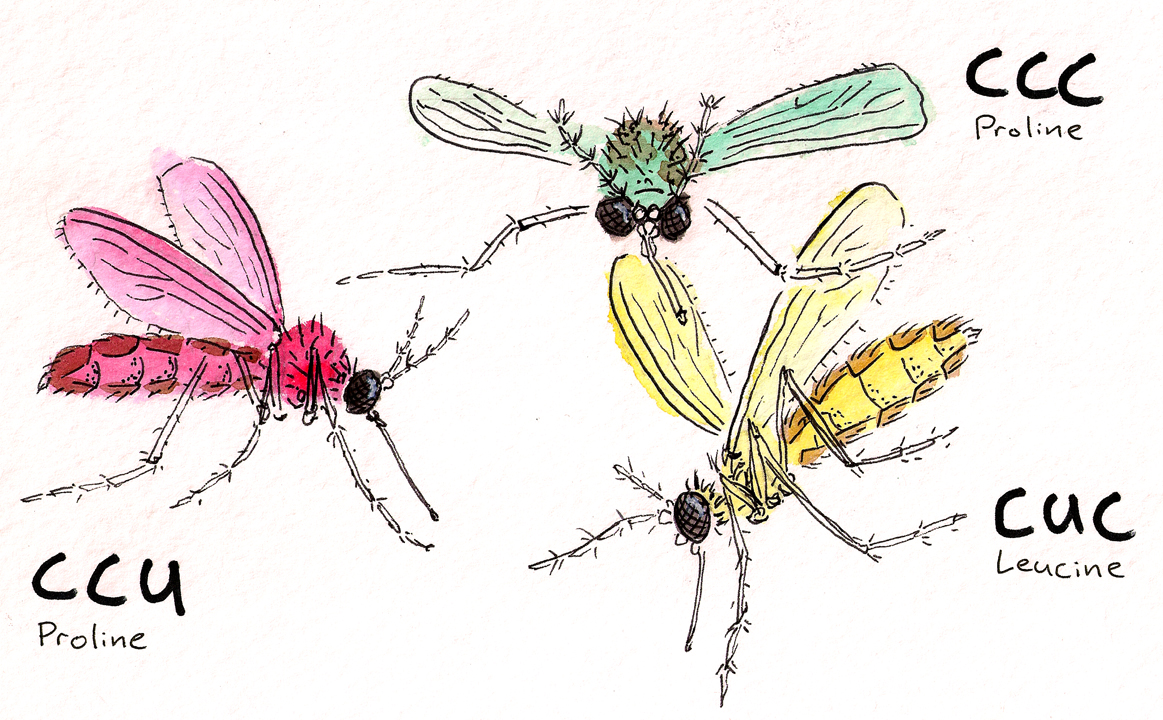
Different colors of mosquitoes in this picture represent a single base pair change, which is one of the mechanisms that can cause variability in a population, that can cause the different genes to insecticide resistance that the individual might have. Linda’s lab at the CDC is studying this genetic diversity. For example, adults that have been found to be resistant (they test them by exposing them to standard amounts of insecticides) could have the kdr mutation, as well as multiple copies of two esterase genes. They extract that individual’s DNA and are interested in the differences in the DNA sequences of both known resistance genes such as kdr and esterases, as well as several other genes. They compare the genetic variation of resistant individuals to individuals that are susceptible to the insecticide. This co-variation in a set of genes in resistant vs. susceptible mosquitoes can give them a better picture of what genes are involved in resistance.
 Walkabout